Selling
to
Giants
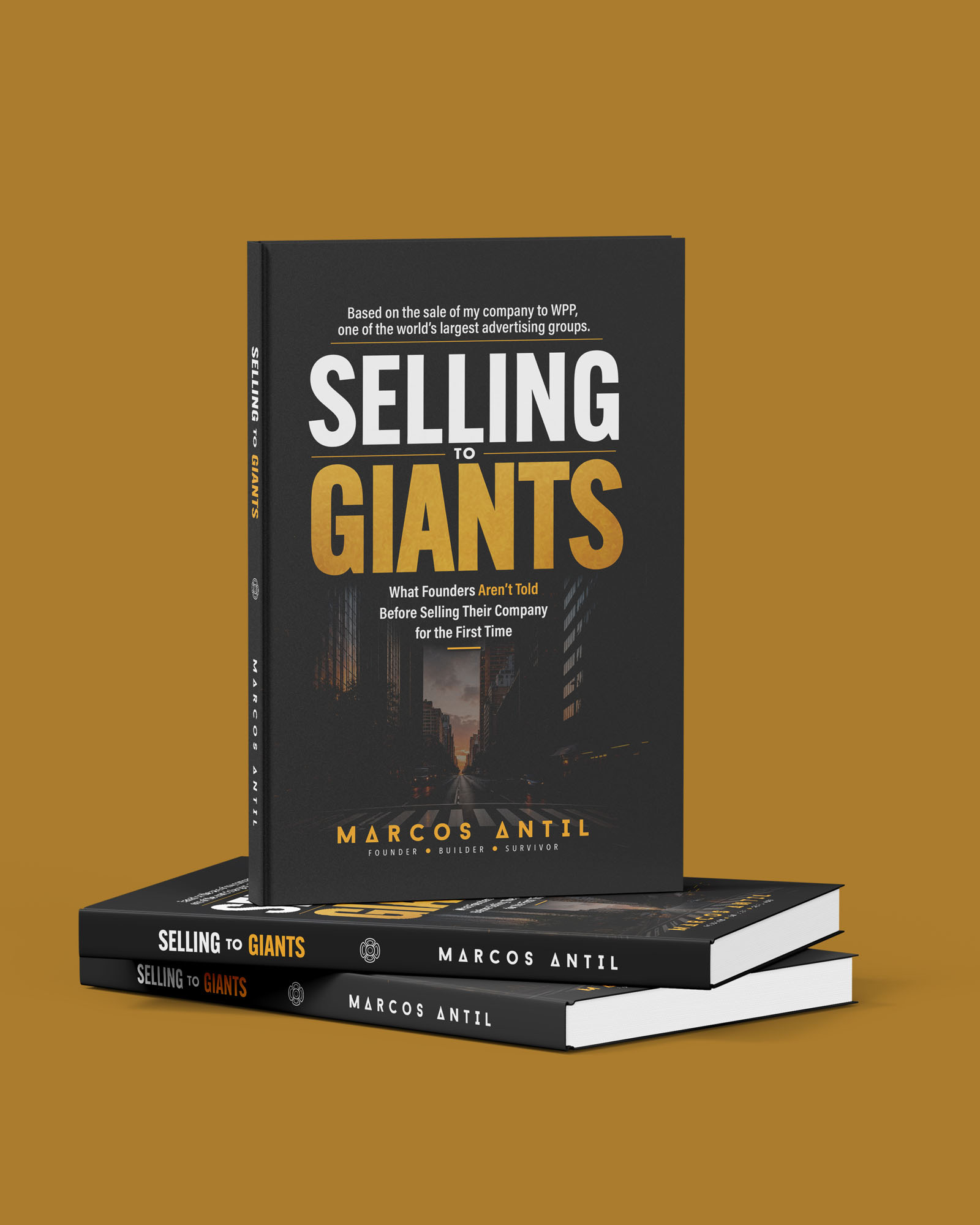
A founder’s manual for first-time sellers—built to keep the exit from becoming a battlefield. What founders aren’t told before selling their company for the first time.
Based on the sale of my company to WPP,
one of the world’s largest advertising groups.
Practical guidance for acquisition, due diligence, employment contracts, earn-outs, and life after closing.
For founders selling their company for the first time.
Selling to Giants is written for first-time sellers navigating the moments before, during, and after an acquisition.
First-time sellers considering an offer
For founders deciding whether they are choosing scale or escaping pressure.
First-time sellers entering acquisition conversations
For founders facing term sheets, diligence, legal review, and a larger buyer across the table.
First-time sellers negotiating earn-outs or employment terms
For founders learning that the headline number is not the whole deal.
First-time sellers preparing for life after closing
For founders preparing for authority shifts, KPI conflicts, documentation, identity, and leverage.
Most books end at the sale. This one begins there.
Many founders dream of selling their company to a Giant. Few understand what comes with it. Selling to Giants follows the hard truths behind one of entrepreneurship’s most celebrated milestones: negotiation, shifting incentives, disappearing authority, contract landmines, earn-out risks, identity loss, fractured friendships, and survival after success.
Selling from strength, not exhaustion
Know why you are selling before the buyer defines the deal.
The number is not the deal
Valuation can hide earn-out risk, employment terms, and control loss.
Giants run a process you have never been through
Diligence, delays, and legal pressure can exhaust judgment.
Closing is not the finish line
After the sale come authority shifts, KPI conflicts, documentation, and identity.
Founder Checkpoints
Audits, red flags, and hard truths for negotiating the sale of your company with Giants.
Am I selling from strength, or from exhaustion?
Selling from instability is not a negotiation. It is an escape.
Does the earn-out match how my business actually operates?
The number is narrative. Structure determines actual realized value.
If control changed tomorrow, what written rights would still protect me?
Rights disappear quickly when authority shifts. Records preserve leverage when memory is no longer enough.